Daegu’s chimaek culture is built around shared chicken, an optional beer, and the pace of a group meal.
Chimaek combines chicken with maekju, the Korean word for beer. In Daegu, the pairing appears both as a summer festival and as an ordinary shared restaurant meal.
The city’s official Korea Tourism Organization listing says the Daegu Chimaek Festival began in 2013 and notes its 2026 Local 100 selection. The festival puts the city’s fried-chicken businesses into one large summer event; neighborhood restaurants and markets show the everyday version.
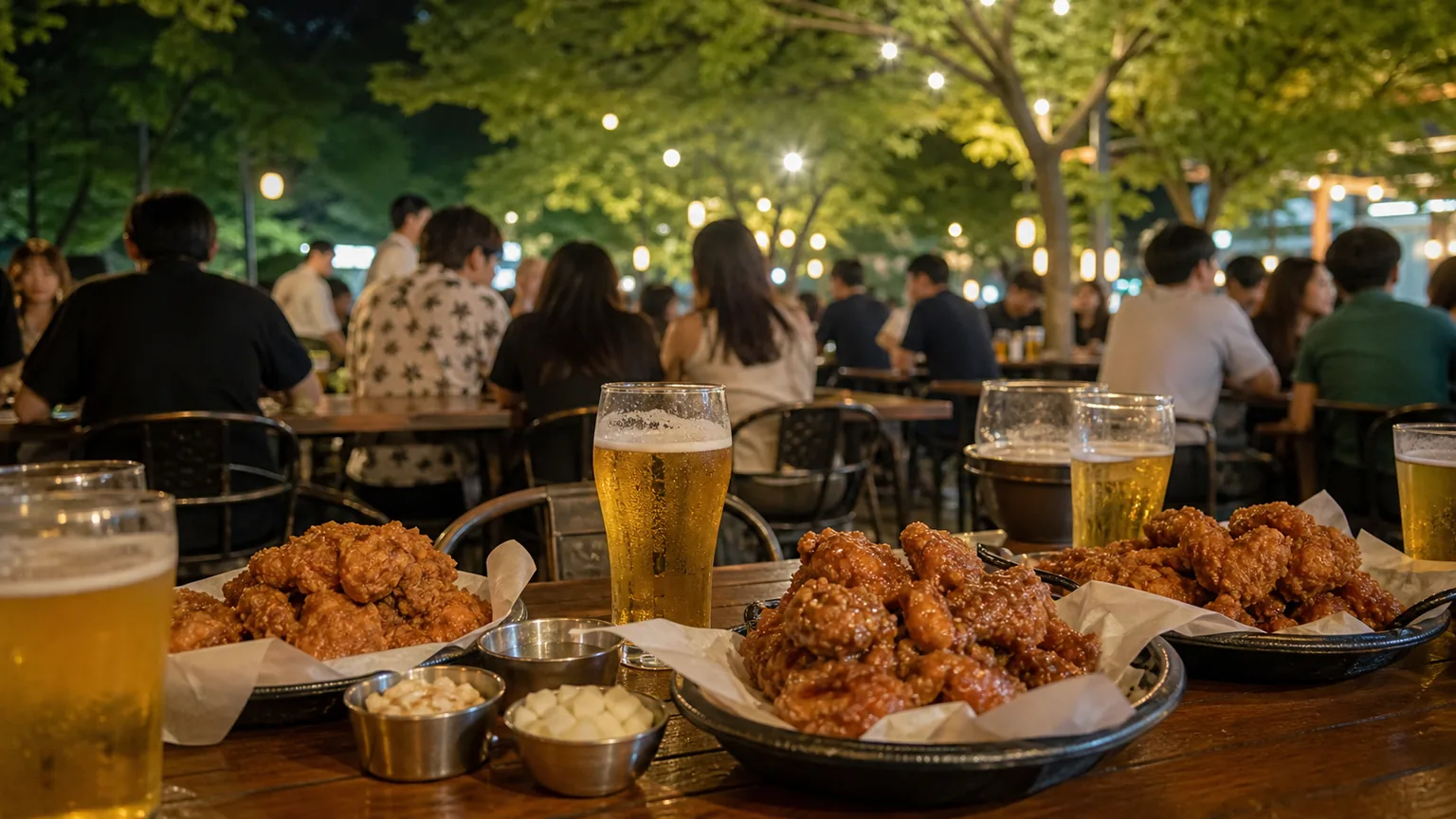
Chimaek at a shared table
Korean fried chicken comes as plain huraideu, sweet-spicy yangnyeom, soy-garlic, boneless pieces, whole cut chicken, and other shop-specific variations. At a group table, people usually choose a mix and share the boxes or platters over the course of the meal.
That makes it different from treating every flavour as an individual challenge. The first useful move for a visitor is to ask what the group wants and order enough to share. Pickled radish, called chikin-mu, is not decorative garnish: it is the cool, sharp counterpoint that resets the palate between bites. If you do not drink alcohol, a soft drink or water is an entirely normal contribution to the table.
Daegu’s fried-chicken history extends beyond the festival. A recent Korean cultural account in Maeil Shinmun traces a local fried-chicken culture through markets including Chilseong, Pyeonghwa, Beongae and Seomun, noting the development of crisp chicken, salt-dipping and garlic-soy variations. That reporting is a better reason to explore the city than the idea that one perfect “original” chicken shop can settle the matter.
The Korean shared-table etiquette guide covers the same group decisions in a wider dining context.
Festival day or neighborhood dinner
The festival’s physical centre is Duryu Park, where official festival information places the main programme zones. In festival season, treat the official Daegu Chimaek Festival site as the only trustworthy source for dates, entry rules, zones and food packages; those details vary by year. The organisation’s current history page identifies Duryu Park as the setting and lists participating businesses, but a past timetable is not a booking promise.
Save the current gate or restaurant under its Korean name using the NAVER Map English search method.
Outside the event window, choose a busy restaurant near the area where you are already spending the evening and order one or two styles for the table. You will have more time to read the menu and ask about sauces or portion size than in a festival queue.
For a festival visit, verify the current program before booking a train or hotel. For a normal dinner, check the restaurant’s live map listing and opening information on the day. In summer, keep water and the return journey in mind before ordering alcohol.
Ordering at the table
- Ask which style the table wants; a half-and-half order is useful when the menu offers it.
- Share the pickled radish and sauces provided with the meal.
- Order more only after seeing the portion size.
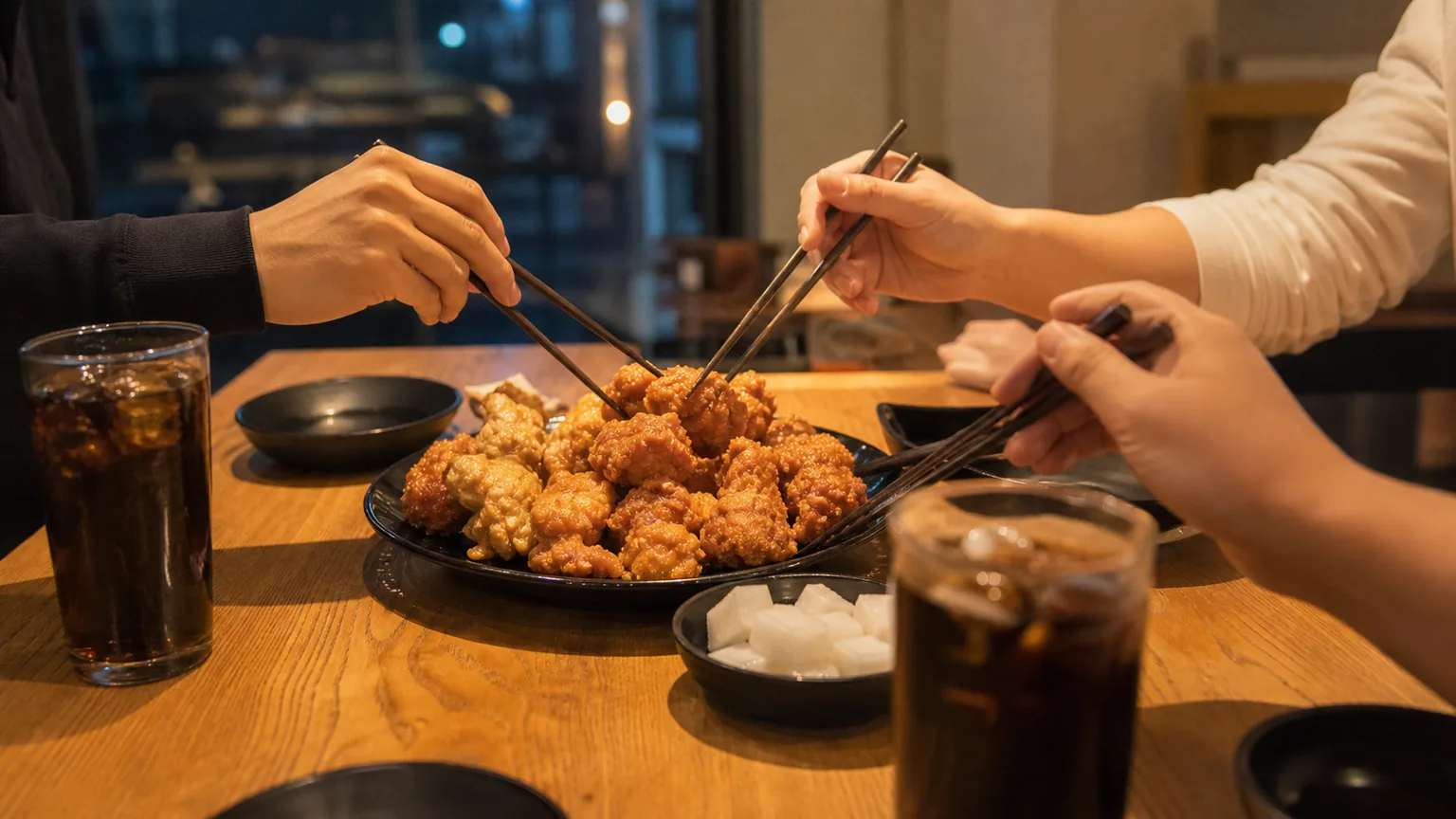
Beer is optional
Beer is optional. At an older or more formal table, people may offer and receive a pour with two hands; a casual peer group may barely notice. Watch the group and accept or decline plainly.
If you do not drink, say so once and choose soda or water. At a mixed-age table, wait for a cue before pouring for someone else; among peers, follow the group rather than performing etiquette from a checklist.
When a shared platter is nearly finished, pause and offer the last piece or ask. It is ordinary group-dining courtesy and works naturally at a meal built around a common tray.
Daegu beyond the festival
If your dates match the festival, use the current program. Otherwise, the markets and neighborhood restaurants reported in Daegu’s local chicken history provide a less crowded place to share the same styles of food.