Sokcho Beach, the Oeongchi coastal trail, and the downtown market fit into a compact weekend without a car.
Sokcho Beach is a city beach within walking distance of the express-bus terminal. The free 2026 Sokcho Summer Festival ran from July 31 to August 2 and has ended, but the beach, Oeongchi coastal trail, and downtown market still form a compact car-free weekend.
The express-bus terminal, beach, pine path, Oeongchi trail, market, and Abai Village sit close enough to divide between two days. Check beach access, weather, transport, and any new event directly with the Sokcho city website before leaving.
Compare a Korea eSIM with pocket Wi-Fi before departure, and save the terminal, beach entrance, and market using the NAVER Map English search guide.
The festival has ended
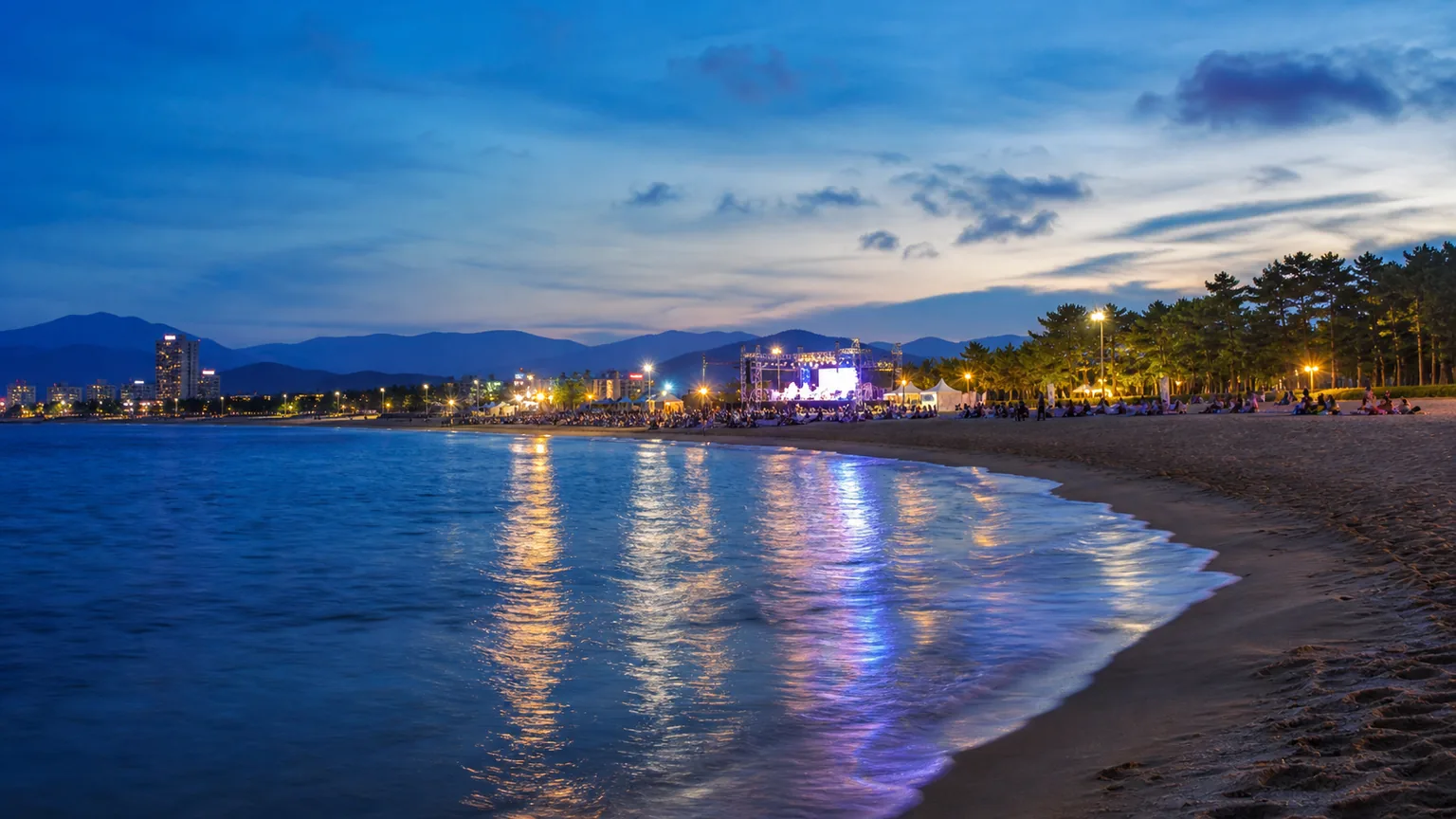
The 2026 program used the public beach as its venue. The ministry listing names the retro-game event Reply Arcade, the water-gun survival activity Summer Splash Water Run, local dance programming, Beach Sound performances, a DJ event, free fan- and pinwheel-making activities, and a local food-and-drink market. It lists Sokcho Beach as the venue and 4:00–9:00 p.m. as the operating window. Those details explain the appeal: the festival creates a reason to arrive in the late afternoon, when the beach changes from swimming ground to public evening space.
In high summer, expect groups, rental gear, nearby meals, and evening activity. Travelers who prefer a quieter visit should use the morning for the beach or trail and move downtown later.
A beach beside the bus terminal
VISITKOREA says Sokcho Beach opened in 1976 and is within walking distance of the express-bus terminal. Behind the city’s recorded 940-meter stretch of sand are a pine grove, a small park, paths, restaurants, and public art. The easy access also brings crowds in July and August, so use the morning for the beach when possible.
Swimming hours are not beach hours
The city beach page listed the 2026 season as July 3–August 23, with normal swimming from 9:00 a.m. to 6:00 p.m. and a stated night-opening period through 9:00 p.m. The beach can remain accessible when swimming is closed; follow the day’s weather and control notices.
Beach first, trail before dark
Start at Sokcho Beach in the morning. The city lists restrooms, showers and changing facilities, foot-wash stations, lockers, rental shops, and parking; check current availability and fees rather than assuming every facility is open or free.
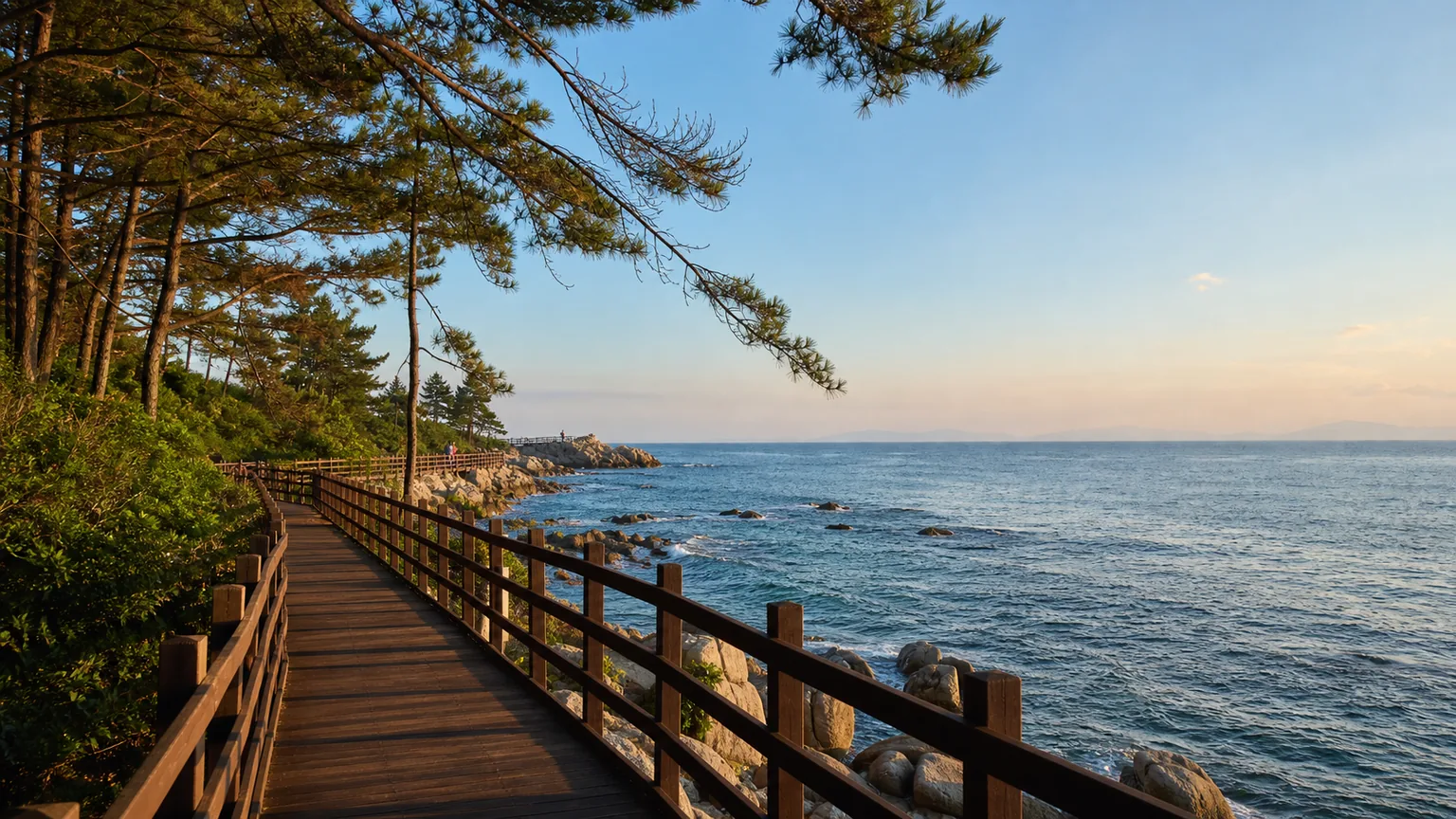
Later, walk south toward Oeongchi Badahyanggiro. The Korea Tourism Organization describes a 1.74-kilometer route from Sokcho Beach to Oeongchi Port, with a beach section and an Oeongchi section that was restricted from civilian access for decades. Stay on the established path and follow current access notices.
For dinner, head downtown to the Tourism and Fisheries Market. The Sokcho Tourism and Fisheries Market guide notes that shop hours vary and places the market within walking distance of the intercity terminal. It also explains why nearby Abai Village is culturally significant: refugees from Hamgyeong-do settled there during the Korean War, and foods such as Hamheung-style cold noodles and pollack sashimi salad remain associated with that history. The market and Abai Village connect the food stop with Sokcho’s postwar resettlement history.
Rules on a busy beach
The city instructs swimmers to remain inside the designated buoys and follow swimming-hour, weather, and staff controls. It also prohibits littering, cooking or camping on the sand, damaging the pine grove, fireworks, and pets in the designated beach area. If swimming is closed, a calm-looking sea is not permission to enter.
The 2026 festival was free, but transport, food, rentals, lockers, accommodation, and private attractions were separate. Peak-season prices move quickly. Reserve accommodation through the operator and verify the return bus with the carrier; a nearby terminal does not guarantee an empty seat.